Why Is 7075 Aluminum Alloy a Top Choice for High-Strength Applications?
Why Is 7075 Aluminum Alloy a Top Choice for High-Strength Applications?
Hot keword :2024 5052 5083 6061 7075
The latest article
- British Purchasing Representative James Conducts On-Site Factory Audit for Bulk Order
- American Purchasing Representative Conducts First Bulk Order Inspection at Anhui Shenchang Aluminum Industry Group Co., Ltd.
- TC4/GR5 Titanium Plate & Rod: High-Strength Alloy for Harsh Environment and High-Performance Engineering
- AZ31B Magnesium Alloy Sheet & Rod: Lightweight Solutions for Multifunctional Engineering
- TA2/GR2 Titanium Plate & Rod: Versatile Pure Titanium for Corrosion Resistance and Lightweight Engineering
- 6061 Aluminum Flat Bar: The Versatile All-Rounder for General Engineering and Manufacturing
Why Is 7075 Aluminum Alloy a Top Choice for High-Strength Applications?
7075 aluminum alloy, part of the Al-Zn-Mg-Cu superhard alloy family, is a standout material for high-strength needs. It consists primarily of aluminum, augmented with zinc (5.1–6.1%), magnesium (2.1–2.9%), copper (1.2–2.0%), and trace amounts of manganese or chromium.
Its greatest strength lies in heat treatability. After solution treatment and artificial aging (e.g., the T6 temper), 7075 achieves a tensile strength of 500–570 MPa—rivaling some steels—while remaining far lighter. It also has excellent fatigue resistance, making it perfect for components under cyclic loads (e.g., aircraft landing gears).
Key applications across industries include:
- Aerospace: Aircraft structural parts (wing spars, fuselage frames) leverage its high strength-to-weight ratio.
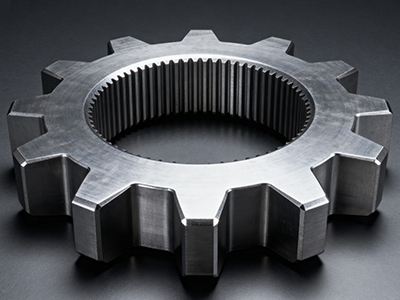
- Industrial: High-stress components like injection molds, heavy machinery gears, and oil drilling equipment depend on its durability.
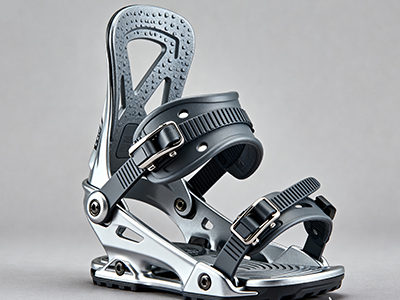
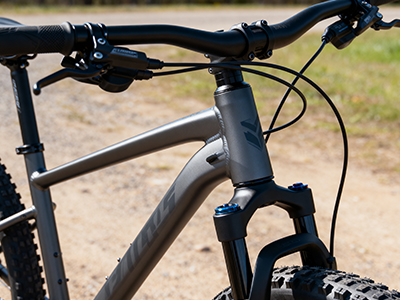
- Sports: Premium bicycle frames, ski bindings, and climbing gear use 7075 for its lightweight toughness.
Different heat treatment “tempers” customize its properties:
- T6: Solution-treated + artificially aged to maximize strength (most common for critical parts).
- T651: Adds stretch straightening post-heat treatment to enhance dimensional stability (ideal for precision molds).
- T73: “Over-aged” to improve resistance to stress corrosion cracking (suited for marine/oilfield environments).
Notably, 7075’s natural corrosion resistance is weaker than pure aluminum or 5xxx series alloys. However, surface treatments like anodizing (creating a protective oxide layer) or powder coating effectively address this—while also adding aesthetic versatility.
When compared to other alloys:
- It outperforms 6061-T6 in strength (6061-T6 has ~310 MPa tensile strength) but falls short in weldability and corrosion resistance.
- Against 2024 aluminum (another aerospace alloy), 7075 offers higher static strength, while 2024 excels in fatigue crack growth resistance.
In short, 7075 aluminum alloy’s blend of high strength, heat treatability, adaptability to critical industries, and mitigatable corrosion issues makes it a top pick for demanding high-strength applications.