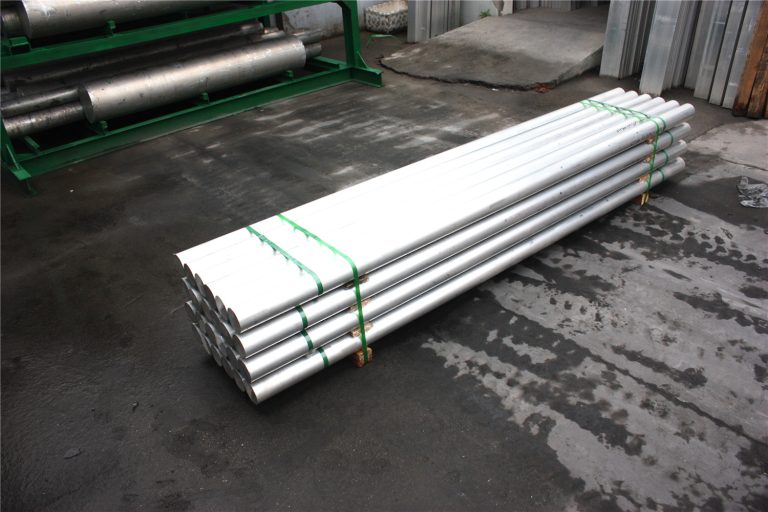
What Makes 7A04 and 7A09 Aluminum Rods the Top Choices for Ultra-High-Strength Load-Bearing Needs?
What Makes 7A04 and 7A09 Aluminum Rods the Top Choices for Ultra-High-Strength Load-Bearing Needs?
Hot keword :2024 5052 5083 6061 7075
The latest article
- What Makes 7A04 and 7A09 Aluminum Rods the Top Choices for Ultra-High-Strength Load-Bearing Needs?
- 6106 Aluminum Rod: High-Extrudability Alloy for Precision & Decorative Structural Parts
- 6082 Aluminum Rod: High-Strength Structural Alloy for Heavy-Duty Industrial Applications
- Why Is 6063 Aluminum Rod the Unbeatable Choice for Extrusion & Decorative Structural Parts?
- Why Is 6061 Aluminum Rod the Most Versatile Choice for Industrial Manufacturing?
- 5A05 vs 5A06 Aluminum Rods: Choose the Right One for Your Corrosion-Resistant Needs
What Makes 7A04 and 7A09 Aluminum Rods the Top Choices for Ultra-High-Strength Load-Bearing Needs?
7A04 and 7A09 aluminum rods are typical ultra-high-strength Al-Zn-Mg-Cu alloys, known as core structural materials in high-stress industrial fields. As heat-treatable alloys, they gain exceptional strength after aging, but each has unique properties for specific extreme load-bearing scenarios. We’ll clarify their key differences, shared advantages, and targeted applications to help you choose the right ultra-high-strength solution.
Shared Core Advantages: Ultra-High Strength & Lightweight Performance
Both belong to the 7xxx series, with heat-treatable strengthening that distinguishes them from common 6xxx alloys. They offer excellent lightweight performance (density ~2.80g/cm³) and extreme load-bearing capacity, making them irreplaceable where strength and weight reduction are critical. Both are widely used in high-end equipment and heavy-duty structures beyond ordinary aluminum alloys’ capabilities.
Key Differences: Mechanical Properties & Performance Focus
The key difference lies in composition and mechanical performance: After T6 temper, 7A04 has a tensile strength of 530–650MPa, with high yield strength and excellent fatigue resistance, focusing on balanced strength and toughness. 7A09 (1.2–2.0% Cu, 2.0–3.0% Mg, 5.1–6.1% Zn) has higher yield strength (≥400MPa), better low-temperature strength (tensile ≥530MPa), and emphasizes extreme rigidity. Both have acceptable machinability in aged tempers (7A09 has slightly better plasticity in annealed/quenched states) and limited weldability, so mechanical connection is preferred.
Corrosion Resistance & Protection Requirements
7A04 has moderate corrosion resistance in natural environments, requiring surface treatments (anodizing, painting, passivation) for longer service life. 7A09 has better stress corrosion cracking resistance and notch sensitivity than 7A04, but also benefits from protective treatments, especially in harsh conditions. Double-stage aging can further enhance 7A09’s stress corrosion resistance.
Targeted Applications: Choose Based on Your Strength Needs
7A04 excels in balanced strength and toughness: aerospace components, missile structures, high-strength molds, heavy machinery brackets, pressure vessels, and automotive racing parts. 7A09 is ideal for extreme rigidity and low-temperature needs: aircraft structural parts, high-load shafts, large pressure vessels, and low-temperature equipment—where 7A04’s strength is insufficient.
Stable Supply & Customized Services for Both Alloys
We supply both alloys in full specifications (various diameters, T5/T6 tempers), compliant with GB/T 4437.1-2000 and international standards. Each batch undergoes strict chemical, mechanical, and internal quality testing (ultrasonic flaw detection). Custom services include fixed-length cutting, rough machining, and heat treatment assistance (double-stage aging for 7A09).
For ultra-high strength and lightweight needs, 7A04 (balanced performance) and 7A09 (extreme rigidity) are reliable choices. Contact us for free samples and technical data sheets to find your perfect fit.